Amazon Buy Box Framework
High-consideration purchases create affordability anxiety.
Customers want to understand total value, not just price, but the buy box showed internal complexity instead of supporting their decision. Trade-ins, installments, promotions, and warranties were scattered and inconsistently ordered, creating an inconsistent experience.
I designed a federated framework that reorganized the buy box around how customers actually decide, replacing clutter with four clear decision zones.
What I delivered:
Reduction of 411 px height on the product page
Unlocked $822M in annual contribution profit
The Design Strategy
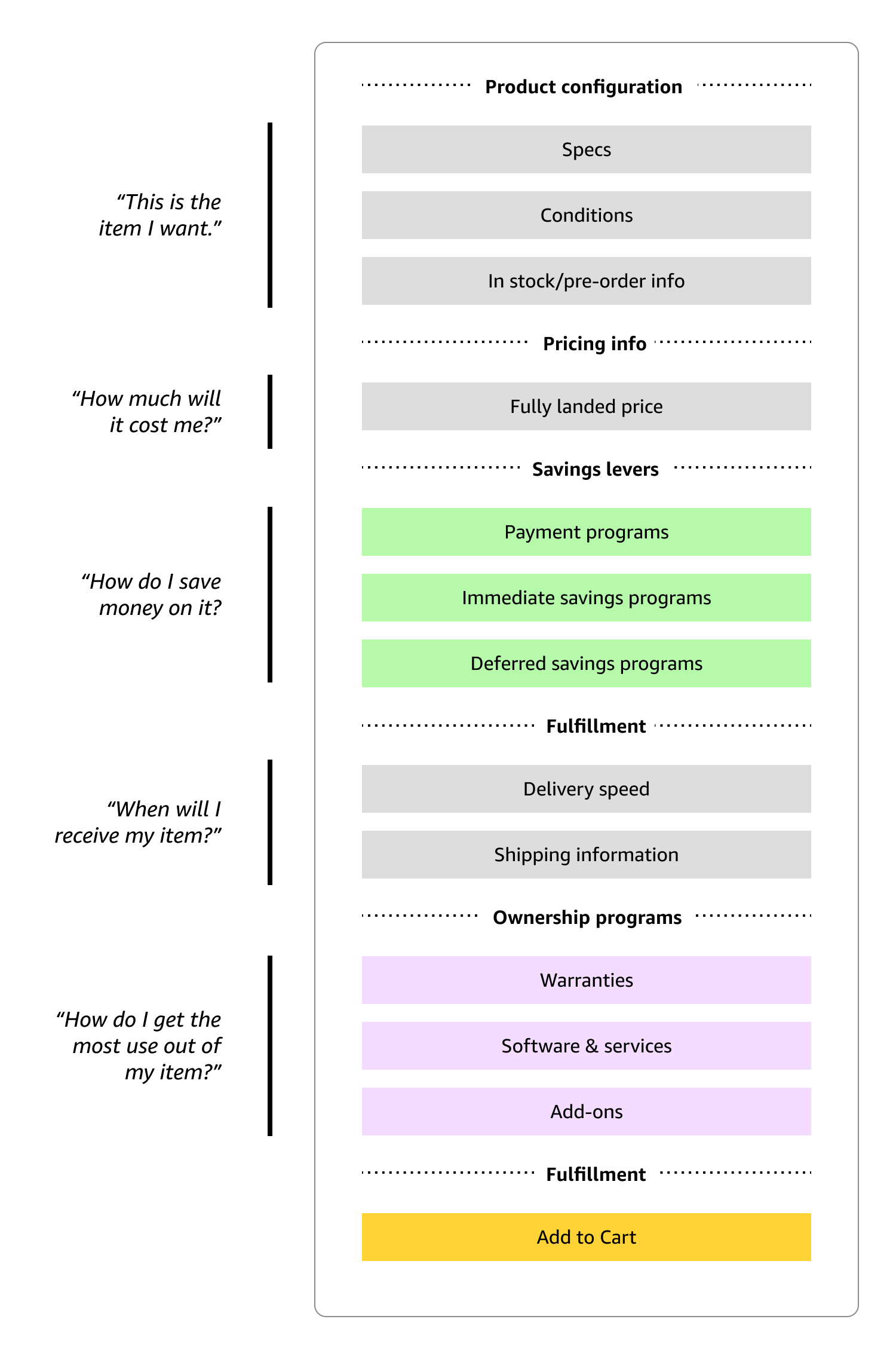
designed a framework that mirrors how customers naturally decide: what it'll cost, how to save, how to get the most use out of it.
The buy box consolidates into four federated zones: product configuration, affordability, fulfillment, and ownership value.
Each zone runs on pre-approved information architecture.
Teams can experiment within shared metrics guardrails, accelerating decisions and learning without destabilizing the rest of the page.
Mapping zones to offerings
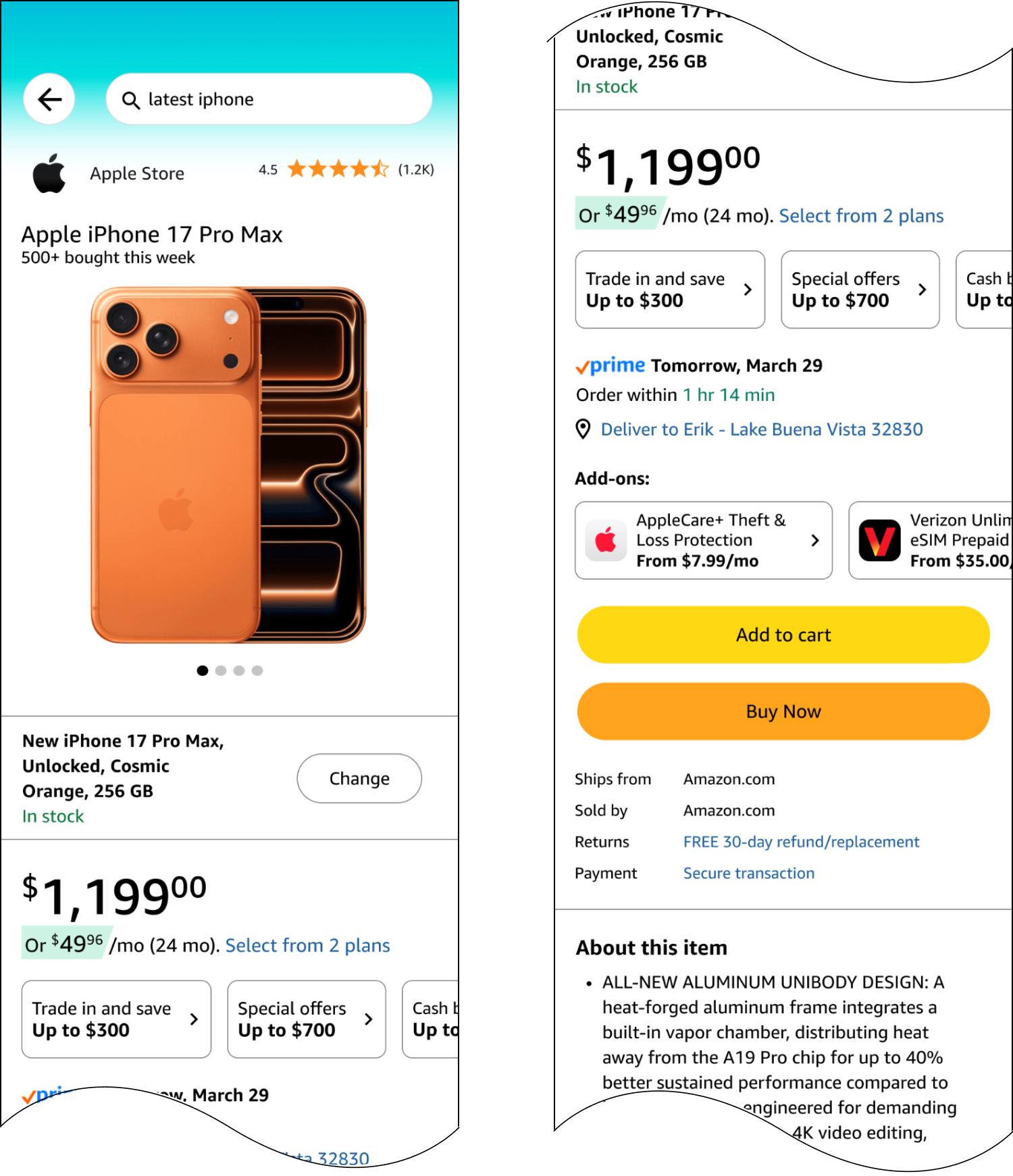
Each zone maps to a specific customer question and houses related business offerings (e.g., financing programs in Affordability; warranties and add-ons in Ownership Value).
This allowed the experience to flex by product type, acknowledging that expectations differ across categories (for example, trade-ins for wireless versus other high-ASP products).
Customer validation
I validated the framework through comparative prototyping and a balanced user study focused on information architecture, feature discovery, and decision flow. The work emphasized pixel frugality and tested whether customers could more quickly understand and act on affordability options when presented as a cohesive system.
Zones in practice
This walkthrough follows the design framework end to end.
Product configuration is consolidated into a single bottom sheet.
An affordability zone brings savings, payments, and coupons into one place.
An ownership value zone pairs warranties with compatible upsells.
This design was preferred by 18 of 24 testers.