My role and responsibilities:
- Senior UX Designer: workshop facilitation, ideation, strategy, UX/UI design, prototyping, cross-functional collaboration (tech, product, design systems, legal/compliance)
- Research: generative research, usability research, competitive analysis
The customer problem:
Customers often struggle to see the value of warranty programs. They are skeptical of the benefits, frequently citing concerns about denied claims and perceived high costs. The claims process is viewed as difficult to navigate, which can deter customers from initiating a claim. When claims are made, the available resolutions may not align with customer expectations, especially regarding downtime and replacement options.
Design process:
- Generative design research (remote async)
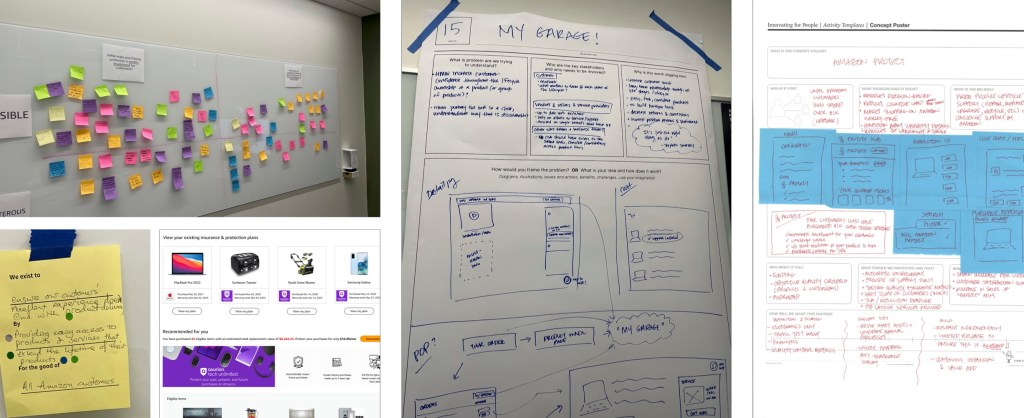
- Cross-functional workshops (on-site in Denver)
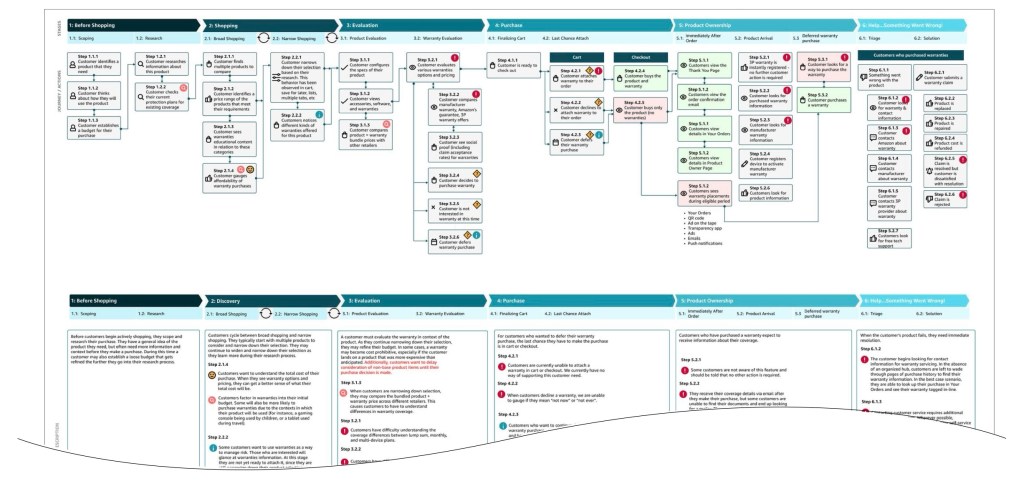
- User journey mapping and research meta-analysis
- Sketching/ideation
- High-fidelity design and prototyping
- Cross-team due diligence (design systems, detail page team)
- Usability testing
- Design pattern scaling for EU
- Legal/compliance approvals
- Dev-ready specifications
- Post-launch iterations
Pre-design research insights (n=48):
My asynchronous remote study yielded the following insights:
- Customers prioritize peace of mind, minimal disruption, strong value, honest communication, and dependable support.
- Warranties are more appealing when the cost of replacing the item is too high to cover out-of-pocket.
- Positive warranty experiences build trust and lead to repeat purchases.
- Clear, upfront expectations about the claim resolution process are critical to earning customer confidence.
The design challenge:
Amazon’s warranty upsell placements were previously static and lacked a scalable design framework to support various plan types and durations.
This initiative marked the first major design overhaul for warranties—and one of Amazon’s first post–add to cart UX migrations. It enabled us to offer warranties immediately after customers added an electronics product to their cart. I collaborated closely with vendors and international teams to ensure the experience addressed the complexities of protection plans while enhancing clarity and transparency for customers.
The solution:
Following a series of alignment workshops and research, I crafted a design strategy that centered the team’s efforts around key customer pain points. The strategy emphasized building a scalable design pattern to communicate value through content, while offering multiple opt-in opportunities throughout the shopping journey. After collaborative scoping sessions with business, tech, and design stakeholders, we narrowed our initial experiment focus on creating the post–add-to-cart upsell experience.
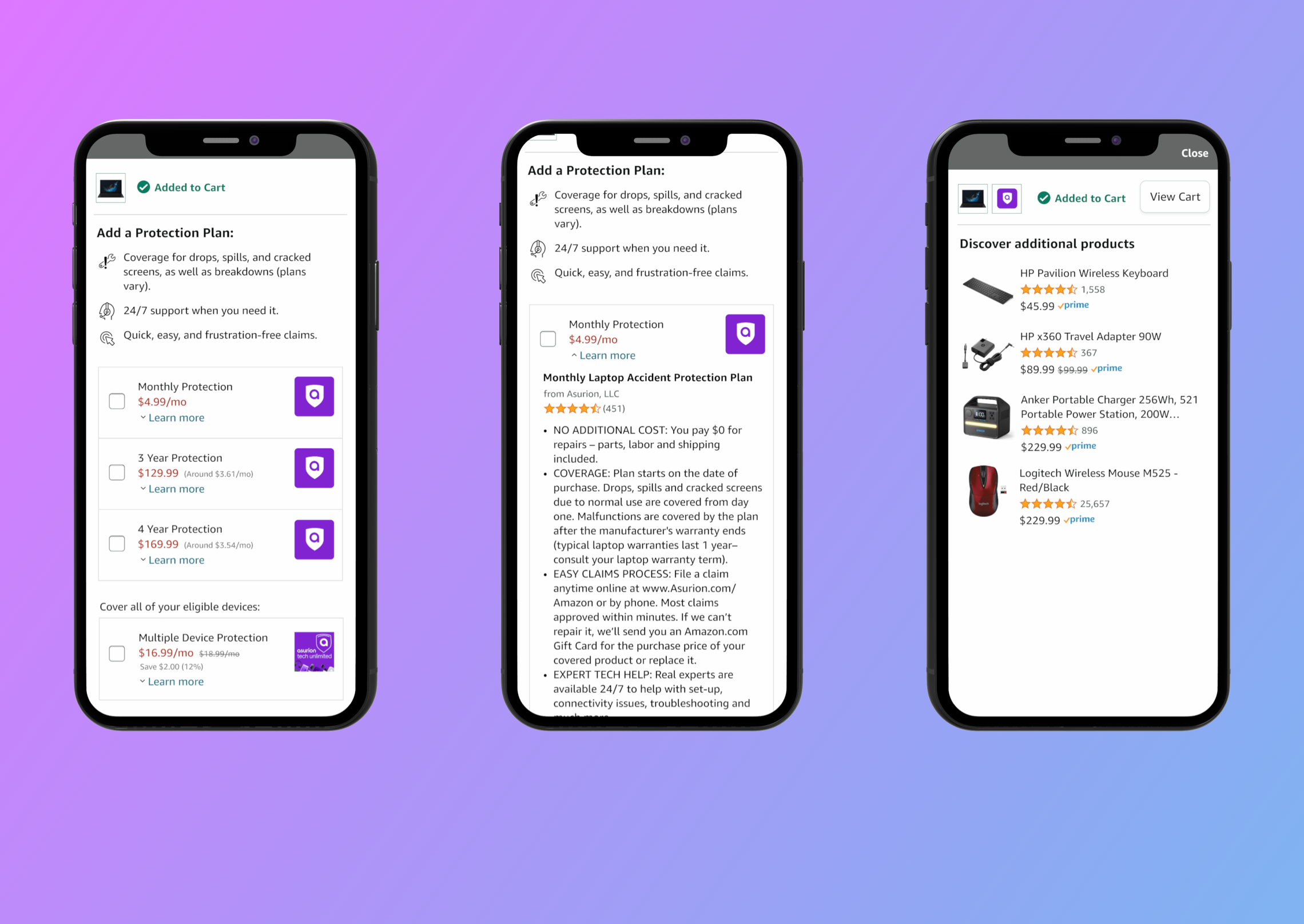
I designed a mobile bottom sheet experience that featured customer benefit highlights, plan names and durations, opt-in controls, and expandable sections for detailed information. The layout was flexible enough to accommodate multiple lump-sum plans and included a static placement for the monthly multi-device plan. The same design framework was later extended to support warranty deals and price drops, allowing promotional pricing to be seamlessly integrated. For the EU, the design was adapted to include a required acknowledgment of the Insurance Product Information Document (IPID) prior to adding a plan to the cart.
Testing insights (n=15):
- Participants were generally open to warranty upsells, with all but one expecting them as a standard part of the experience. While some indicated they wouldn’t purchase a plan, no one voiced negative feedback. Many found the reminder helpful and saw value in the content provided.
- All participants successfully located and explored the warranty details with ease.
- Overall, feedback indicated that the prototype’s content and drill-down design were highly effective and required no significant changes.
Results:
- Product page placement: $29M (+$9M when promotions were enabled)
- Additional details to be provided during portfolio review

 Amara Hulslander | UX Designer & Educator