
The Situation
Customers purchasing high-consideration products wanted peace of mind, but protection plans were often perceived as confusing, hard to find, and not worth the cost. Pre-design research revealed that customers cared most about minimizing disruption, receiving dependable support, and feeling confident that claims would be handled fairly and transparently. Skepticism was highest when warranty value was unclear or when expectations around claim resolution felt ambiguous. This resulted in missed attachment opportunities, low trust, and increased downstream support when customers didn’t fully understand what they had purchased.
The Strategy
I grounded the design strategy in early research insights showing that warranties are most compelling when replacement costs feel meaningfully high and when expectations are set clearly upfront. Rather than treating warranties as a transactional upsell, I reframed them as a trust-building decision journey that spans discovery, evaluation, purchase, and post-purchase moments.
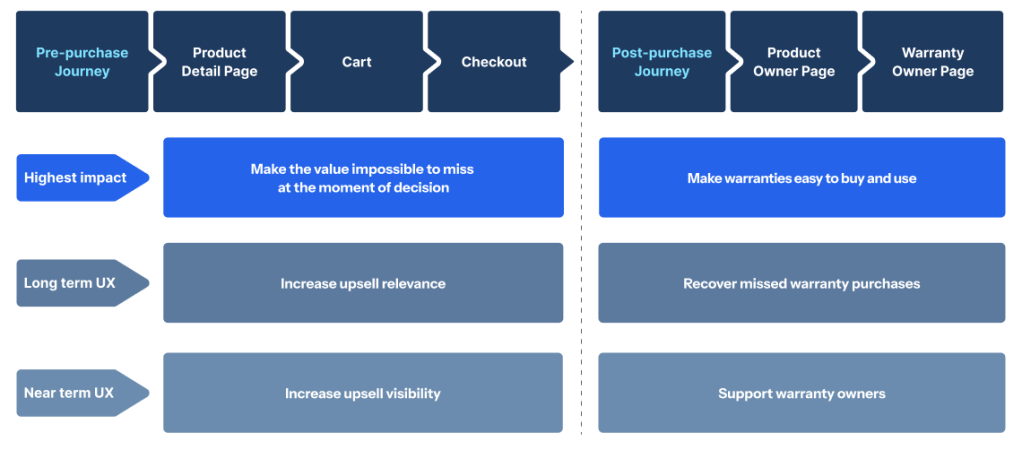
To reinforce perceived value, I focused on tight coupling of price and protection, placing warranty education near product pricing and cart totals so customers could directly assess replacement risk versus coverage. Messaging emphasized peace of mind, reduced disruption, and clarity around what happens when something goes wrong—addressing the moments where trust was most likely to break down.
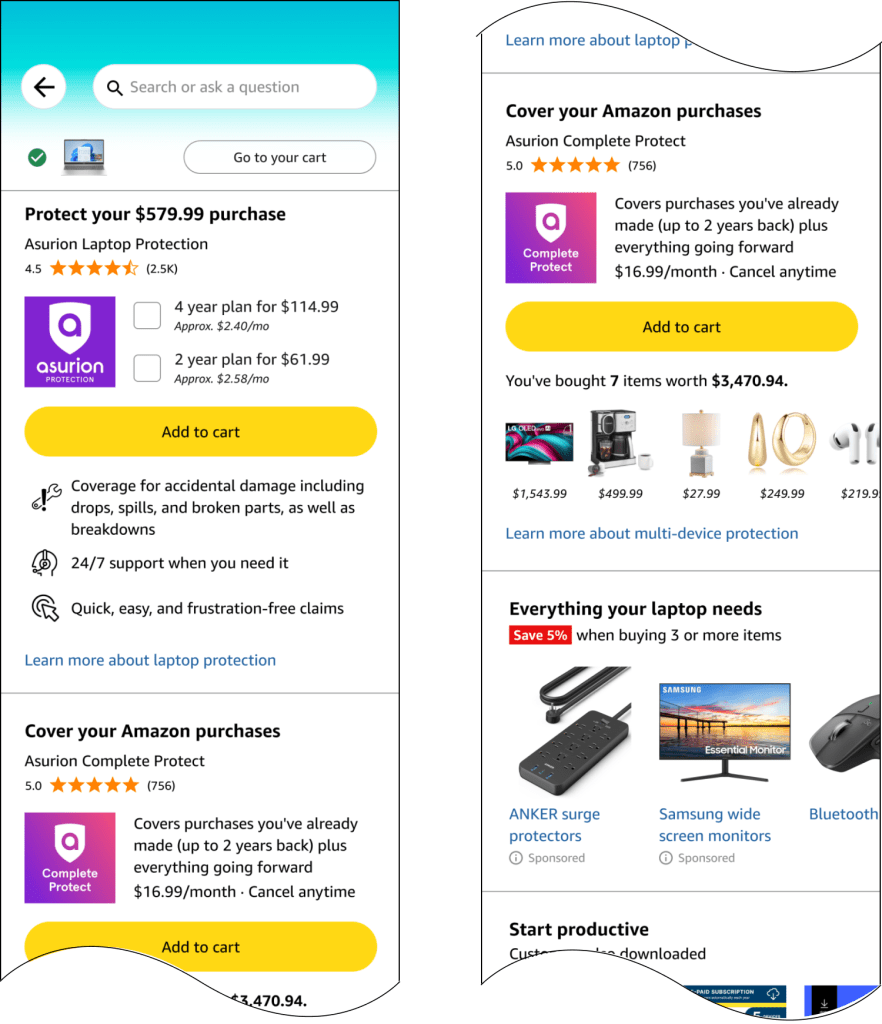
At a systems level, I designed scalable, low-impact ingress patterns that allowed customers to opt in from multiple surfaces—product detail pages, cart, checkout, and post-purchase—without forcing linear behavior or repeated steps. This approach supported non-linear shopping patterns while ensuring consistent education, honest communication, and predictable outcomes across marketplaces.
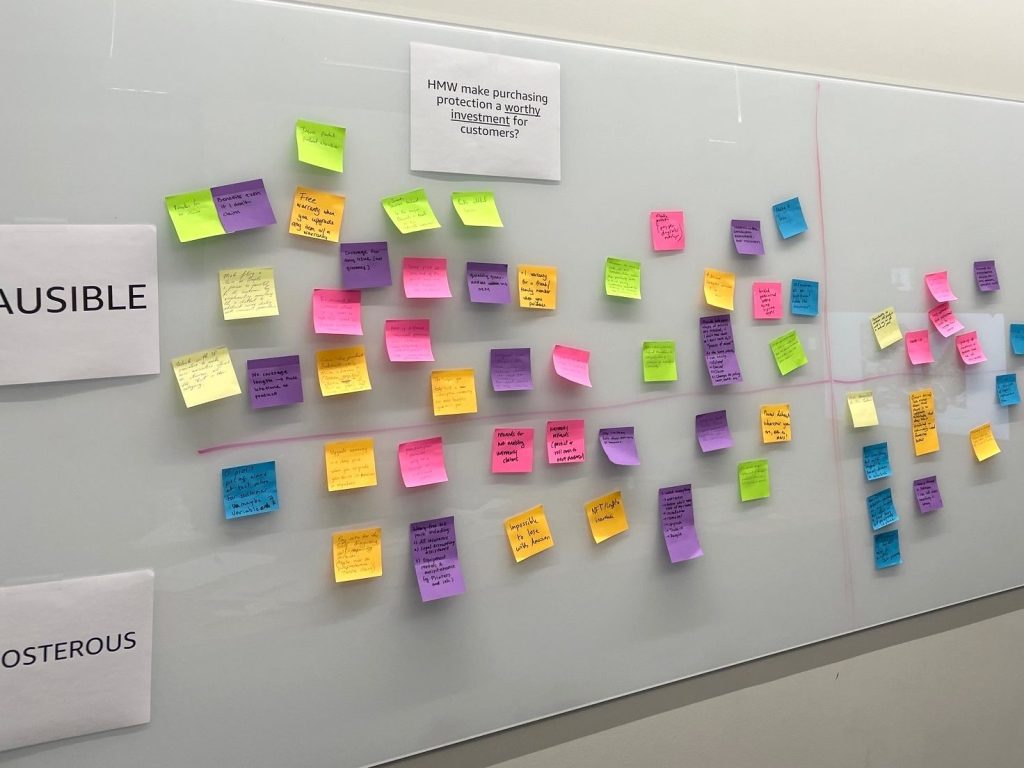
Alignment workshops with engineering, legal, and vendor partners helped translate research insights into feasible, extensible solutions.
The Result
- Increased warranty attachment driven by clearer value framing and better alignment with customer decision moments
- Strong post-purchase engagement, indicating increased trust when expectations were set upfront
- 20% conversion rate on post-purchase warranty upsell emails
- Reduced customer contacts related to warranty management by 25% through improved education and self-service support
- Usability research confirmed customers could easily find warranty details and correctly differentiate between plans
- Established a scalable design framework for warranty education and opt-in that influenced future merchandising and basket-building initiatives

 Amara Hulslander – UX Designer